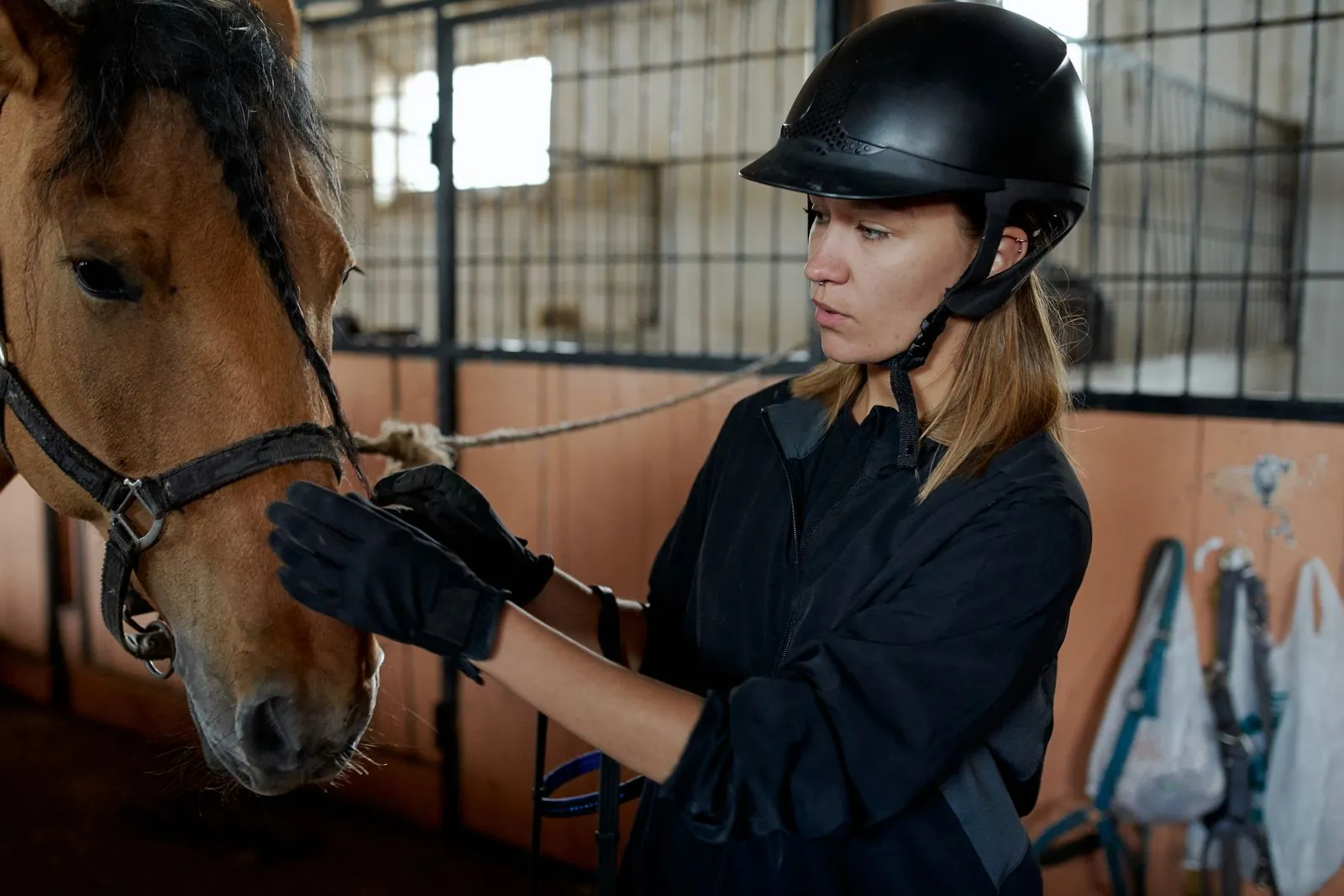
A veterinary visit is easier when your horse is settled, the handler is prepared, and key health details are ready to share. Before the appointment, confirm where the vet should park and which horse needs attention. Set up a safe, well-lit area with room to work, and arrange a capable handler who knows the horse. These simple steps help the veterinarian assess your horse efficiently while reducing avoidable stress and handling risks.
Set Up Safe Handling
Choose a quiet, level area with good footing and enough space for the veterinarian to move around your horse. Remove loose equipment, buckets, and other obstacles. If the examination may involve walking or turning, check the route beforehand for gates, slippery surfaces, dogs, or traffic. Keep other horses at a comfortable distance if their presence tends to distract or upset the horse being examined.
Have a well-fitting halter and lead rope ready, and use a handler who is confident with this horse. Tell the veterinarian beforehand if your horse kicks, bites, pulls back, resists having its legs handled, or has any other behavior that could affect safety. Do not wrap the lead rope around your hand. If the horse becomes difficult to manage, pause and ask the veterinarian how to proceed.
Gather Health Information
Write down what prompted the visit, when you first noticed the concern, and whether it has changed. Note specific observations such as appetite, water intake, manure, movement, coughing, or changes in behavior. Include relevant recent events, such as a change in feed, workload, pasture, or travel. Clear details help the veterinarian understand the problem and decide what to examine.
Prepare a record of current medications and supplements, including what you give and when. Share known allergies, past illnesses, surgeries, vaccination information, and previous reactions to medication or handling. If another veterinarian has examined the horse for the same issue, have any available notes or test results ready. Be honest about what you have observed and what care you have already tried.
Make the Examination Easier
Follow the clinic’s instructions about feeding, exercise, or preparation; these can vary depending on the reason for the visit. Do not withhold food, give medication, or change a treatment plan unless the veterinarian has advised you to. If you are unsure whether a recent dose or meal matters, ask when you book or call before the appointment.
Have a clean space and any equipment the veterinarian may need, such as a bridle or saddle if the concern relates to ridden work. Keep the horse’s usual companions nearby only if that helps it stay calm and does not interfere with the examination. Make sure someone can open gates, move other animals, and assist with safe restraint if requested.
Plan the Appointment
Confirm the appointment time, location, and access details. Share directions or gate information in advance, and let the clinic know about delays, difficult access, or changes in the horse’s condition. If the horse may need to be examined in a stable or yard, check that the area is accessible and that lighting is adequate.
Keep your phone available and decide who will speak with the veterinarian and make care decisions. Bring a way to record instructions, including follow-up steps and signs that should prompt another call. If the horse’s condition becomes urgent before the scheduled visit, contact the clinic promptly rather than waiting for the appointment.
Safe handling, a clear account of your horse’s health, and a suitable examination area all help make a veterinary visit more productive. Prepare what you can, then tell the veterinarian about anything that could affect the horse’s comfort or safety. For help arranging a visit, contact Brisbane Equine Vet.